How to Never Slow Down: Lessons from Kilian Jornet
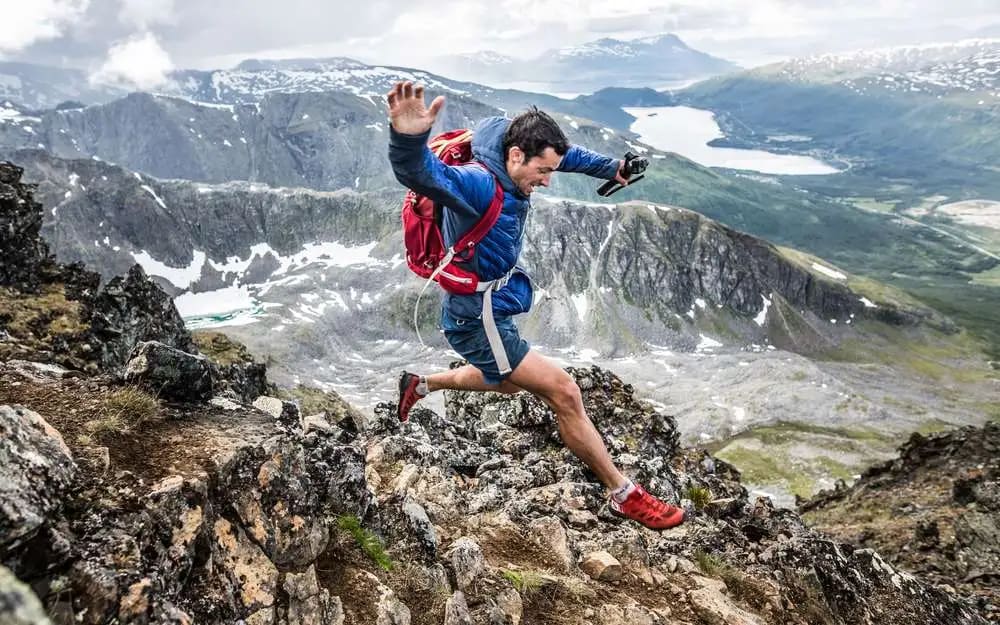
Most people think elite endurance is about suffering.
Pushing harder. Digging deeper. Surviving pain.
Kilian Jornet runs 100+ kilometers over mountain ridges, through the night, at altitudes that would knock most athletes flat. And he makes it look controlled.
Not effortless. Controlled.
That distinction is everything.
Because Kilian isn’t constantly pushing the limit. He lives just under the red line - for hours. No spikes. No crashes. No wasted effort.
No drama. Just output.
It looks smooth. Almost easy.
It isn’t easy. It’s precise.
The Real Engine: Aerobic Base
Strip everything down, and this is where it starts.
A massive aerobic system. Not flashy. Not impressive. Not Instagram-worthy. But everything depends on it.
It’s what allows Jornet to:
- Keep moving for 20+ hours without flooding with fatigue
- Recover while still working - active recovery, not collapse
- Maintain output without falling apart in the final hours
Sound familiar? It should.
Same thing happens in a fight. If your aerobic base is weak, every exchange costs more. Every scramble drains you faster. Every mistake compounds. Toughness doesn’t save you.
Your system either holds… or it breaks.
The mountain and the cage run on the same engine.
Efficiency Beats Intensity
Here’s where most people get it wrong.
They train like every session has to prove something. Hard rounds. Hard lifts. Hard conditioning. Always pushing. Always grinding. Always red.
But Kilian’s advantage isn’t that he works harder than everyone else.
It’s that he wastes less.
Every step is efficient. Every movement has a purpose. Nothing extra. No wasted mechanics. No burning energy he’ll need later.
That’s why he can go longer.
And it’s why most fighters gas out – not from lack of effort, but from effort they didn’t need to spend.
You can see the opposite in how Islam Makhachev controls pace and energy over five rounds.
Tense shoulders. Wild punches. Holding the clinch too tight. All of it drains the tank.
Pacing Is a Skill
Watch an inexperienced fighter step into the cage.
They come out fast. Explosive. Aggressive. The crowd loves it.
And then Round 2 hits, and they’re already half-empty.
Not because they’re out of shape. Because they don’t understand pace.
Kilian does. He knows exactly how fast he can move without paying for it later. He’s done the work. He’s logged the hours at low intensity, building that internal calibration that tells him - every second - exactly where his limit is.
Pacing isn’t holding back. Pacing is control.
And control is what lets you stay dangerous when everyone else slows down.
UTMB 2022: Pacing Under Pressure
Look at what happened at UTMB 2022.
170 kilometers. 9,000 meters of climbing. And Jornet crossed the line in 19:49:30 – the first person ever to break the 20-hour barrier.
But the story isn't the record. It's how he got there.
For the first 125 kilometers, Jim Walmsley – who had moved to the French Alps specifically to win this race – was ahead and building on the course record pace. Most people watching thought it was over.
Jornet didn't chase. He stayed in his range. Patient. Controlled. Letting Walmsley burn his matches.
At kilometer 151, after already running for over 14 hours, Jornet made his move. He surged for a full hour – hitting speeds that most people couldn't hold fresh. By the time he crested the final climb at kilometer 161, he had a 7-minute gap.
That's not luck. That's a man who knew exactly where his limit was – and saved just enough to use it at the right moment.
In his post-race interview, Jornet said:
"Since the start there has not been a single moment in which I have not suffered."
Read that again.
He was suffering the entire time. But he never went past what he could sustain.
That's what pacing actually looks like at the top level. Not comfort. Controlled discomfort - for as long as it takes.
Fatigue Tolerance Isn’t Just Physical
At some point in a long race - or a long fight - it’s not about lungs or legs anymore.
It’s about decision-making under fatigue.
Can you stay sharp when you’re tired? Can you read what’s happening around you? Can you keep moving efficiently when every part of you is screaming to slow down?
That’s where elite endurance really lives.
Not in how hard you can go. But in how long you can stay sharp.
In sustained clarity - making good decisions when your brain is running on fumes.
What We Should Actually Take From This
You don’t need to run mountains.
But you do need to rethink how you train.
Most people are building intensity… without building the system that supports it. They’re adding floors to a building with a weak foundation.
And wondering why it cracks.
If your conditioning isn’t where it should be - start here:
- Spend more time in low-intensity work (Zone 2). If you’re always in the red, you’re never building the base.
- Learn to control your pace, not just push it. Know what ‘80%’ feels like and train there deliberately.
- Focus on efficiency before volume. Sloppy movement at high volume just builds sloppy habits.
- Stop treating every session like a test. Some days, the goal is to build - not to prove.
More isn’t better. Intensity without a system is just noise.
Different Arena. Same Rule.
Cage or mountain – doesn't matter.
The athlete who manages energy best wins. Not the one who goes hardest early. Not the one who “wants it more.”
The one who keeps going while everyone else falls apart.
That’s what Kilian Jornet does on a mountain.
That’s what Islam Makhachev does in the cage.
Different arena. Same rule.
And that’s the skill most people ignore – until it’s too late.
Was this post helpful?
Your feedback helps us improve our content.